
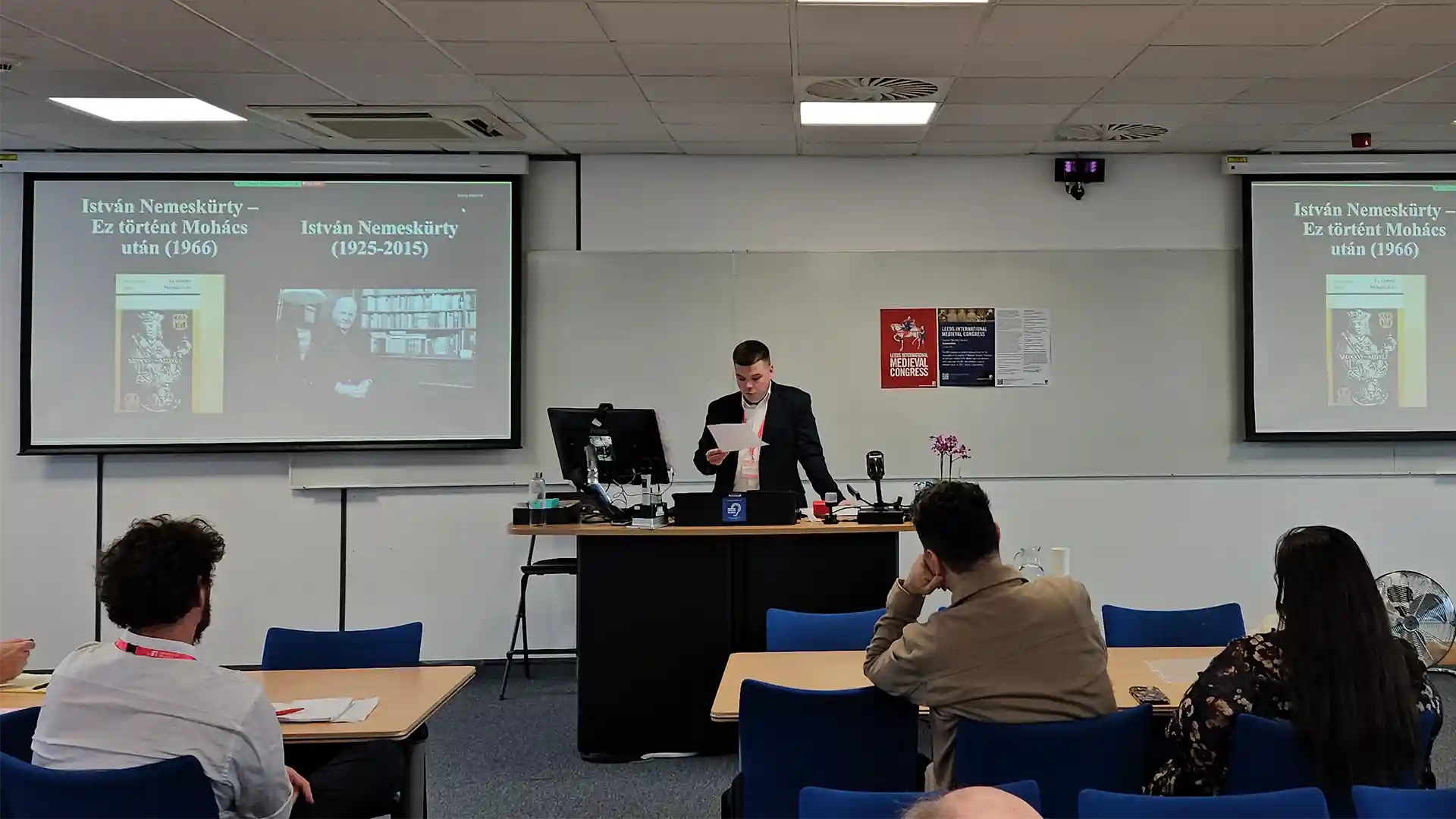

As part of the international dissemination activities of UNIDICE – Voices of Central Europe, István Kovács, PhD Candidate, Deputy Operational Director, Research & Content Development Lead and Student Engagement Coordinator, and Péter Kovács, PhD Candidate, Operational Director and Programme Manager, presented their research at the International Medieval Congress at the University of Leeds. Their participation offered an opportunity not only to present research connected to the project's central themes, but also to introduce the ideas and objectives of UNIDICE to a wider international academic audience.
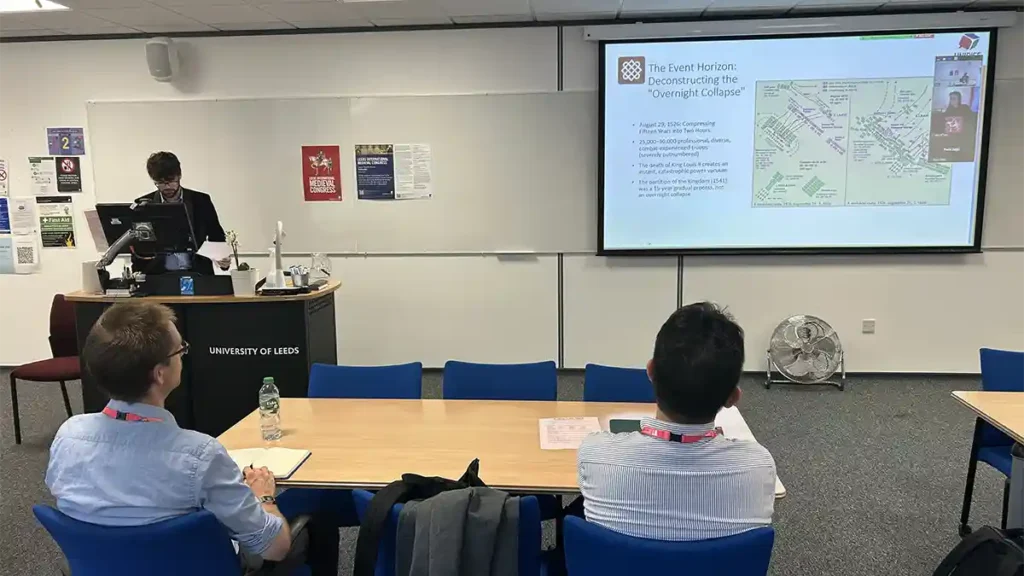
Two presentations were connected by a shared question that lies at the heart of UNIDICE: how do societies remember, reinterpret and give new meanings to the past? Using the Battle of Mohács (1526) as a case study, the presentations explored the changing meanings attached to historical events and the ways in which their later memory can continue to shape identities, political narratives and public understandings of history.
Participation in the congress was important not only as an opportunity to present individual research, but also as an early international dissemination activity for the UNIDICE project. Leeds provided a valuable setting in which to introduce the project's main questions to an academic audience extending well beyond Central Europe and to connect the project's regional perspective with wider debates in European history, memory studies and historiography.
The event also offered an opportunity to test one of the fundamental challenges of UNIDICE communication: can questions that emerge from specifically Central European historical experiences be presented in a way that is meaningful and accessible to audiences outside the region? Discussions with international colleagues provided useful feedback on how concepts such as Central European identity, shared and contested memory, and the changing interpretation of historical events can be communicated to scholars who do not necessarily work within Central European national historiographical traditions.
This kind of audience testing is particularly important for UNIDICE. The project aims not only to encourage dialogue between Hungarian, Czech and Polish academic communities, but also to make Central European historical questions understandable and relevant within a broader European and international context. International conferences therefore provide an important space for testing terminology, narratives and comparative approaches before they are developed further in the project's workshops, publications, videos and educational materials.
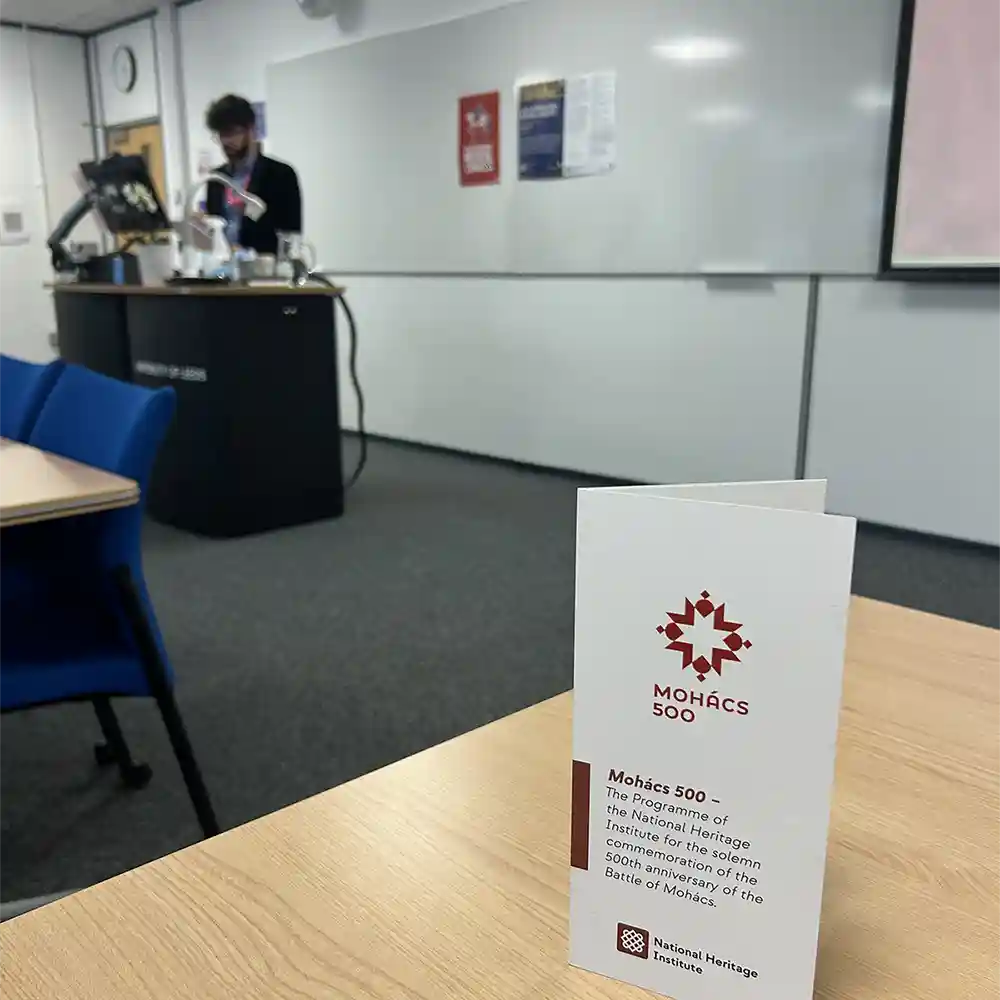
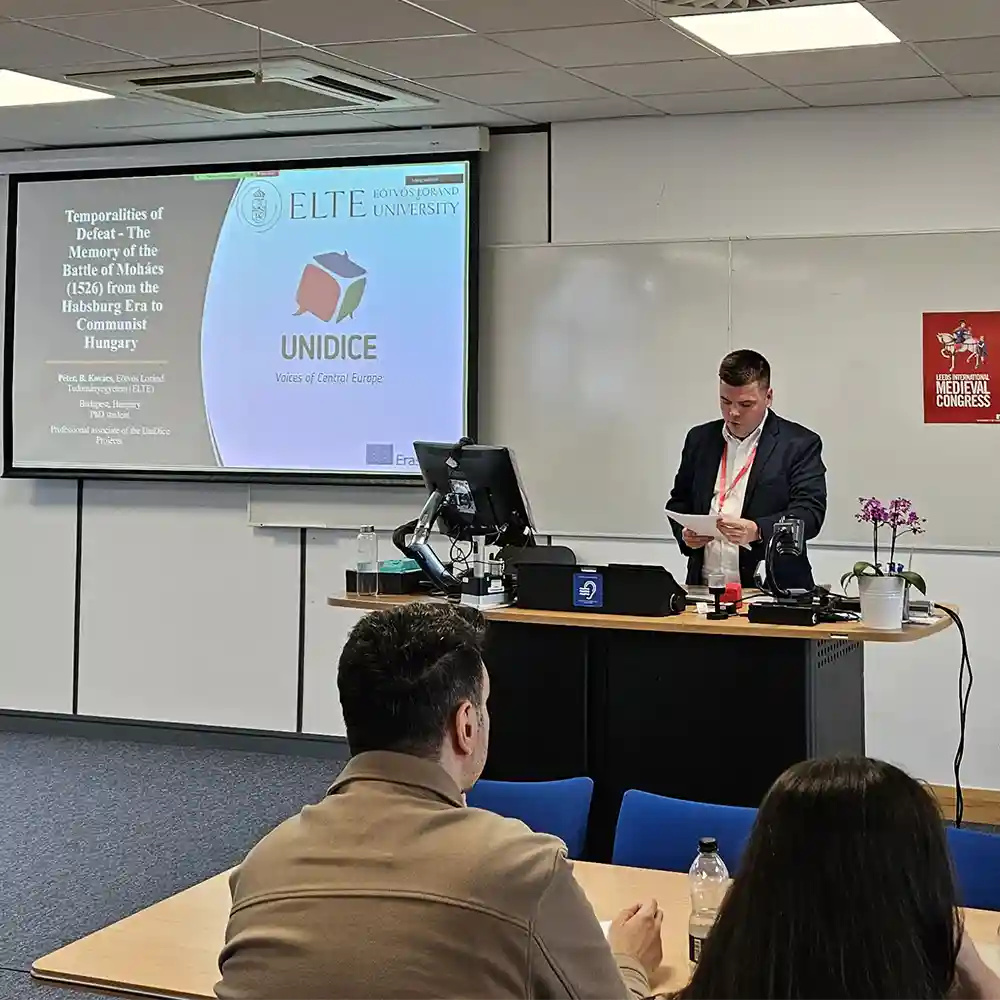
The Leeds experience also reinforced the project's emphasis on memory and the second life of historical events. Mohács offers a particularly revealing example of how the meaning of an event can change over centuries and how historical memory can become part of later political, cultural and national narratives. Approaching such cases comparatively helps demonstrate why Central European history cannot be understood exclusively through individual national perspectives.
Participation in the International Medieval Congress therefore served a double purpose: it brought UNIDICE-related research into a major international academic discussion while simultaneously helping the project team evaluate how its core ideas can be communicated to audiences beyond Central Europe.
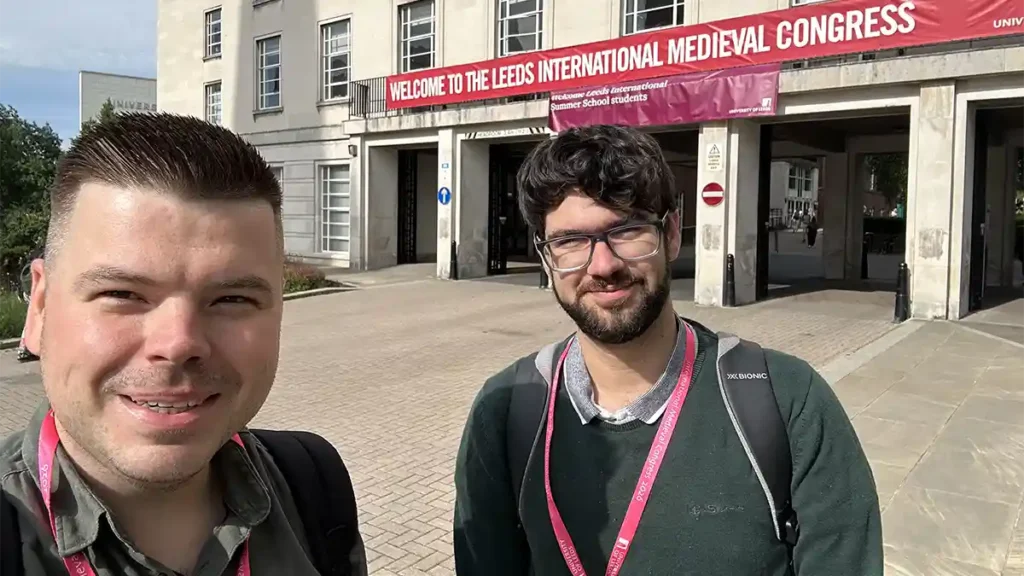
The inspiring discussions in Leeds provided valuable input for the next stages of the project and confirmed the importance of maintaining a strong international dimension throughout UNIDICE.
Two presentations, one shared question: how do societies remember and reinterpret the past?