
About UNIDICE and the project team
Voices of Central Europe
UNIDICE – Unity, Diversity and Identity in Central Europe is an Erasmus+ project co-funded by the European Union, bringing together universities, scholars, students, and experts from across Central Europe. The project explores how Central Europe has been imagined, organised, divided, remembered, and continuously redefined throughout history — and what these historical experiences mean for the region today.
UNIDICE did not begin from scratch. It grew out of two years of close cooperation within the RECALL project, where colleagues from our partner universities created a shared academic and educational environment involving 15 university lecturers and researchers and more than 30 students. Through workshops, joint discussions, teaching activities, and the development of innovative educational materials, RECALL demonstrated the value of approaching Central European history through sustained international cooperation.
UNIDICE is the next step in this shared journey. It builds on the academic community, mutual trust, working methods, and experience developed during RECALL, while significantly broadening both the thematic scope and the ambition of our cooperation. What began as a two-year collaboration has grown into a longer-term Central European network connecting scholars, students, and institutions across national borders.
At the centre of UNIDICE is a deceptively simple question:
What does Central Europe mean — historically, culturally, politically, and today?
Central Europe has never had a single, universally accepted meaning. Its borders have shifted, its political structures have changed, and its societies have repeatedly negotiated questions of belonging, identity, cooperation, conflict, and historical memory. Rather than searching for one fixed definition of the region, UNIDICE approaches Central Europe as a historical space shaped simultaneously by unity, diversity, and identity.
The project therefore creates a shared platform where different national perspectives and historiographical traditions can meet. By bringing together established scholars, younger researchers, students, and wider audiences, UNIDICE seeks not to create one uniform story of Central Europe, but to understand how its different histories are connected, where they diverge, and how they continue to shape the region.
As an Erasmus+ cooperation project, UNIDICE combines academic research, international collaboration, innovative education, and student participation. Its objectives include strengthening historical awareness of Central European identity, fostering cooperation among scholars, students, and institutions, developing new educational tools and academic publications, and giving younger generations an active role in academic discussion.
Over the course of the project, these goals come together through a common intellectual structure: nine major themes, 27 workshops, an international edited volume, and a nine-module online course. Rather than functioning as separate outputs, the workshops, publication, and course grow out of the same discussions and expert contributions, creating one connected academic and educational programme.
To explore this question, the project follows nine major themes ranging from the changing geographical and conceptual boundaries of Central Europe to Christianisation, empires and nations, revolutions, wars and migration, regional cooperation, post-1989 transformations, memory politics, and possible futures of Central European identity.
These themes allow us to look beyond national historical narratives and to place familiar events, debates, and historical figures into a wider comparative Central European context
One project, three connected academic outputs
A central principle of UNIDICE is that its activities are not developed separately from one another. The workshop series, edited volume, and university course follow the same nine-topic intellectual structure and are designed to inform and strengthen each other.
Academic debates generated during the workshops feed into the development of the publication and teaching materials. Contributors to the volume can participate in the workshops and course, while students and invited experts become part of the same international conversation.
In this way, UNIDICE is not simply producing a collection of events or individual outputs. It is building a shared framework through which Central European history can be discussed, compared, taught, and reconsidered.
Workshops and international dialoguedemic outputs
The project organises 27 academic workshops across Central Europe, structured around nine thematic areas.
Each topic consists of one international workshop and two national workshops. Their format combines focused academic discussion with public roundtable conversations, bringing together established scholars, younger researchers, doctoral students, and university audiences.
The workshops create spaces where national historiographical traditions can meet, different interpretations can be compared, and familiar historical questions can be reconsidered from a broader regional perspective.
Research and publication
The discussions developed through the project will contribute to an international English-language edited volume provisionally entitled:
Unity, Identity and Diversity: History and Memory of Central Europe – An Introduction
Designed as a selective and accessible academic handbook, the volume will present major questions, concepts, events, debates, and case studies from Central European history through approximately ninety concise contributions organised into nine thematic chapters.
The aim is not to produce an encyclopaedia of Central Europe, but to offer students, teachers, researchers, and interested readers a carefully structured introduction to some of the questions that have shaped the region.
Learning beyond the classroom
UNIDICE will also transform its academic discussions into an international nine-module online course.
Each module will combine expert contributions, narrative video content, recommended materials, and e-learning activities. The course will build directly on the same intellectual framework as the workshops and publication, allowing research produced within the project to become accessible teaching material.
Students will not only participate in the course but will also contribute to its development and testing. Their involvement is an important part of our aim to make the project genuinely accessible, international, and student-centred.
Building a Central European academic community
UNIDICE is also about creating connections.
Through workshops, editorial meetings, study sessions, virtual professors' meetings, student participation, and the Professors' Hub, the project brings together academics from different generations, institutions, disciplines, and national research traditions.
The aim is to create a network that lasts beyond individual events — a community in which ideas, research questions, teaching practices, and perspectives on Central Europe can continue to circulate.
Why UNIDICE?
History in Central Europe has often been written within national borders. Yet many of the region's most important historical processes have never respected those borders.
Dynasties, religions, empires, universities, intellectual movements, revolutions, wars, migrations, political ideas, memories, and identities have always travelled across them.
UNIDICE therefore starts from the conviction that understanding Central Europe requires conversation across national historiographies.
It does not seek to erase different historical experiences or produce one common narrative. Instead, it asks how those differences can be placed alongside one another — and what we can learn when the histories of Central Europe are discussed together.
Unity. Diversity. Identity. Three ideas that have shaped Central Europe for centuries — and three questions that remain open today.
Partners
UNIDICE brings together five partner institutions from across Central Europe, building on a long history of successful cooperation. Members of the partnership have previously worked together through national and international initiatives, including Erasmus+, CEEPUS, Visegrad, and other academic and educational projects.
The partnership combines universities and academic organisations with complementary expertise, networks, and experience in research, higher education, international cooperation, and public engagement.
Eötvös Loránd University (ELTE), Budapest
Project coordinator
Over the last hundred years, Eötvös Loránd University (ELTE) has had many world famous scientists and four Nobel Prize laureates among its teachers and alumni. The current number of students enrolled yearly has reached 33,000, and there is an academic staff of 1,800 highly-qualified teachers and researchers.
Masaryk University, Brno

We believe that education is not just a matter of age or social status. We actively support research. We are open-minded and dedicated to influencing the lives of people around us.
We have been creating a smarter world since 1919.
University of Wrocław
We have been operating since 1702 and are one of the oldest universities in Central Europe. We build on the historical heritage of Silesia and the legacy of Austrian, Prussian, Czech and Polish culture, continuing also the traditions of the Polish universities in Lviv and Vilnius.
Saint Adalbert Foundation for Central and Eastern European Research
Associated Partner
Our Foundation was established in 2009 by the Archdiocese of Esztergom-Budapest, under the leadership of Cardinal Péter Erdő, Primate of Hungary and Archbishop of Esztergom-Budapest. The Foundation is headquartered at the St. Adalbert Centre in Esztergom, Hungary.
The Foundation’s main objectives are:
- To promote a better understanding of the peoples of Central and Eastern Europe and to highlight the shared historical experiences and common destiny of the nations of the region.
- To foster dialogue and cooperation among the countries of Central and Eastern Europe.
- To promote a sense of Central European identity both within and beyond national borders.
- To collect, analyse and disseminate key information concerning the region.
- To organise conferences and publish materials addressing the current situation, historical experiences and future prospects of Hungarian communities living beyond Hungary’s borders.
University of Debrecen
Associated Partner
Debrecen is one of the most dynamically-developing university towns. The number of international students studying here is increasing from year to year, at the beginning of each semester numerous students and teachers leave their home country and start a new chapter in their lives at a place yet unknown to them. Our university is enriched not only by the knowledge coming from all parts of the world but also through the diversity of cultures and personalities.
Project Team
UNIDICE is made possible by an international community of historians, educators, project coordinators, researchers, students, and partner institutions working together across Central Europe.
Meet the people responsible for the academic direction, project coordination, thematic development, research, communication, student engagement, and implementation of the project.
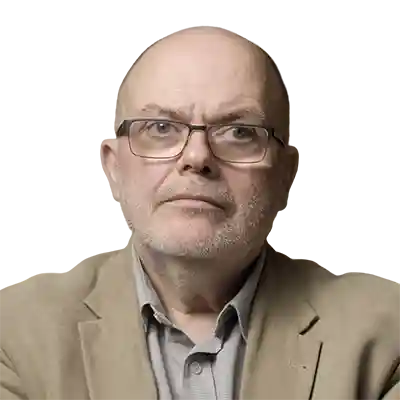
Prof. Dr. Dániel Bagi
Project Director & Academic Lead
Eötvös Loránd University (ELTE), Budapest
Provides the overall academic direction of UNIDICE and oversees the intellectual coherence of the project. He coordinates the connection between the project's research, workshop, publication, and educational activities.

Péter Kovács, PhD Candidate
Operational Director & Programme Manager
Eötvös Loránd University (ELTE), Budapest
Responsible for the overall operational coordination and day-to-day implementation of UNIDICE. He manages the programme structure, international cooperation, project workflows, events, and coordination between the different work packages and partner institutions.

István Kovács, PhD Candidate
Deputy Operational Director, Research & Content Development Lead, Student Engagement Coordinator
Eötvös Loránd University (ELTE), Budapest
Supports the operational management of the project and coordinates research- and content-related development. He also oversees student engagement, helping to connect UNIDICE's academic activities with the participation of younger researchers and university students.
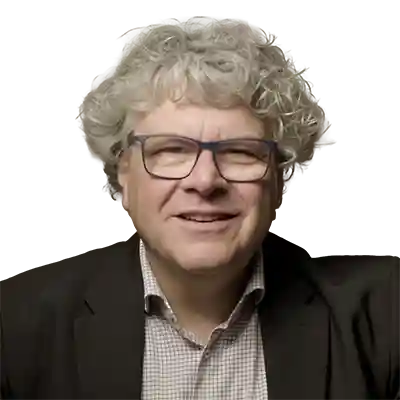
Dr. Andor Mészáros
Senior Academic Advisor
Eötvös Loránd University (ELTE), Budapest
Contributes senior academic expertise to the development of the project's research and educational activities. He supports the academic planning of UNIDICE and the integration of its Central European historical perspectives.
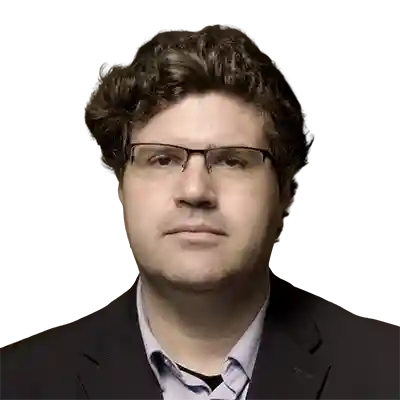
Dr. Bálint Mezei
Academic Advisor
Eötvös Loránd University (ELTE), Budapest
Supports the academic and editorial development of the project, contributing to the preparation and coordination of its research, publication, and educational outputs.
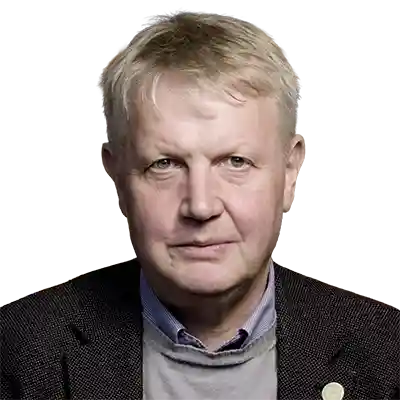
Prof. Dr. Martin Wihoda
Czech Academic Lead
Masaryk University, Brno
Leads the academic contribution of the Brno team and coordinates its involvement in the research, workshop, publication, and teaching activities of UNIDICE. He is also responsible for the intellectual coordination of designated thematic areas within the project.
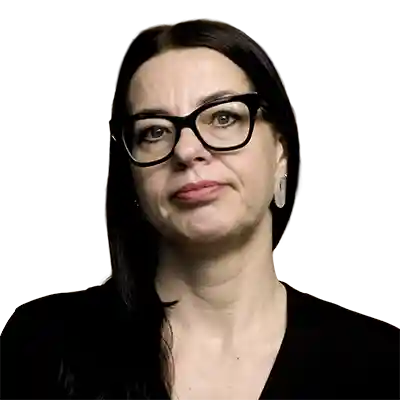
Dr. Denisa Nečasová
Senior Academic Advisor
Masaryk University, Brno
Provides senior academic expertise within the Czech project team and contributes to the development of the project's thematic, research, and educational activities.

Dr. Jiří Němec
Academic Advisor
Masaryk University, Brno
Contributes to the academic implementation of UNIDICE within the Brno team, including research, thematic development, workshops, and educational activities.
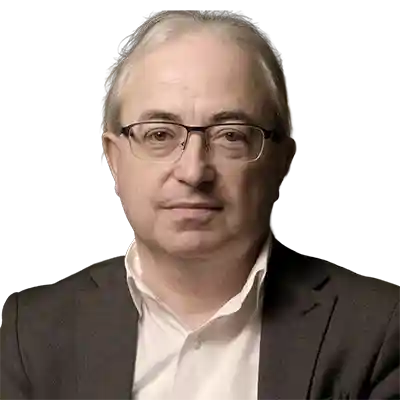
Prof. Dr. Filip Wolański
Polish Academic Lead
University of Wrocław
Leads the academic contribution of the Wrocław team and oversees its participation in the research, workshop, publication, and educational activities of UNIDICE.

Prof. Dr. Jakub Tyszkiewicz
Senior Academic Advisor
University of Wrocław
Provides senior academic expertise within the Polish team and contributes to the intellectual development and coordination of the project's research, publication, and teaching activities.
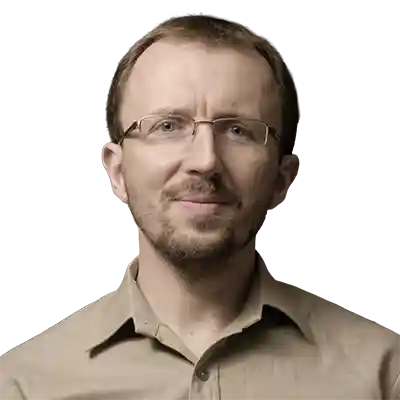
Dr. Jakub Węglorz
Academic Advisor
University of Wrocław
Contributes to the academic implementation of the project and supports the development of its thematic workshops, research activities, publications, and educational content.